Pride is about people. From the earliest flickers of progress, when bricks at Stonewall paved the way for defiant marches, and when the repeal of sodomy laws led to the legalization of civil unions, Pride was always more than a parade.
Since June was first recognized as Pride Month in the US in 1999, the movement has become a well-earned party for out-and-proud participants and allies. But far more, Pride is about acceptance and inclusion on a wider, evergreen scale — one that extends well beyond the bounds of June, and well beyond the parade route.

This year, we are looking at those who have pushed the Pride movement forward. (Photo Credit: Edward Howell)

Past and present, pride is about people.
That movement is a testament to the brave pioneers who dedicated their lives to ensuring such progress, for themselves and for future generations to follow. Through the thick and thin, the successes and the hard-fought failures, there are folks who persevered and left an indelible mark.
In honor of Pride Month this year, these are some of the most powerful and inspiring people — past and present — in the Pride movement.
Marsha P. Johnson
Forever synonymous with the paradigm-shifting events at Stonewall, Marsha P. Johnson was unabashedly herself. Although the term “transgender” was not widely known during her lifetime, the drag queen used she/her pronouns, and used her experiences — in both sex work and as a houseless individual — to work as an activist.
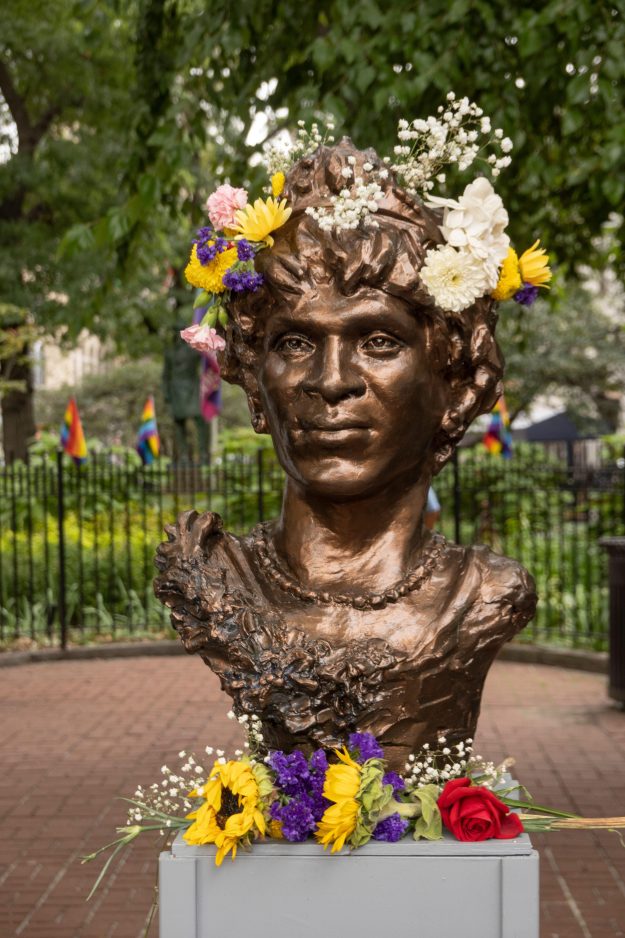
Marsha P. Johnson played a pivotal role in the Pride movement of New York City. (Photo Credit: Randy Duchaine)
Together with Sylvia Rivera, she created the Street Transvestite Action Revolutionaries (S.T.A.R.) to provide housing for LGBTQIA+ youth in New York. The two also played pivotal roles during the Stonewall Riots of 1969, fighting back against police brutality, and going on to lead Pride marches in the years to follow. She continued to advocate her entire life, until her death in 1992.
Harvey Milk
One of the most famous figures in America’s Pride movement, Harvey Milk shattered more glass ceilings in his abbreviated lifetime than most politicians ever do. One of the first openly gay politicians to be elected to office in the US, and the first in California, Milk came to fame in the late 1970s.

Harvey Milk was one of the first openly gay politicians to be elected to office. (Photo Credit: Robert Clay)
Using his role as San Francisco city supervisor to ban discrimination based on sexual orientation, he also fought to protect teachers from being fired for being gay. His time in office was brief but vital. A year after his election in 1977, Milk was shot to death by another supervisor, Dan White.
Barbara Gittings
When picketers first flanked the streets to protest the employment banishment of homosexuals in the federal government, Barbara Gittings was there. When the American Psychiatric Association finally removed homosexuality from its list of mental illnesses in 1972, Barbara Gittings was there. And when the American Library Association bestowed a lifetime membership for her lifelong efforts supporting inclusive literature, Barbara Gittings was there.
An ardent activist and the head of the New York chapter of the Daughters of Bilitis, the nation’s first lesbian rights organization, Gittings was always at the front lines of progress. After devoting her life to homosexual visibility, both the American Library Association and GLAAD named awards after her, to honor Gittings’ efforts and share it with those following in her noble footsteps.
Audre Lorde
Born in Harlem in 1934 and a lifelong defender of feminism and queer inclusion, Audre Lorde was a riveting writer who led her life around civil rights. As a Black lesbian, she faced prejudices from every angle, and fought against them at every turn, often using poetry to speak volumes. Her impact was felt far and wide, too.
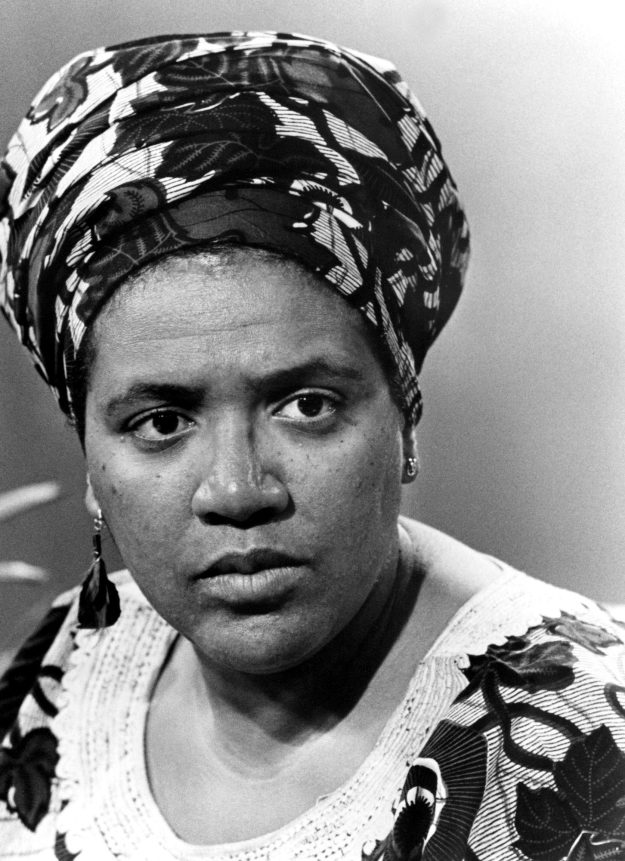
Audre Lorde is known for saying, “I am not free while any woman is unfree, even when her shackles are very different than my own.” (Photo Credit: Everett Collection Inc)
In the Virgin Islands, she founded the Women’s Coalition of St. Croix to support women who experienced sexual abuse. In South Africa, she established the Sisterhood in Support of Sisters, providing resources and solidarity amidst apartheid. In Cuba, Lorde visited with local writers and shared insights into how the Pride movement could have positive impact on the island. Across the globe, her important work paved a path forward.
Billie Jean King
Professional athletes, in all their stereotypical heteronormativity, are not often on the front lines of social progress — which is what makes Billie Jean King such a standalone exception. A tennis legend, and the first woman to be named Sports Illustrated’s Sportsperson of the Year in 1972, she advocated diligently for women’s rights and LGBTQIA+ rights.

Billie Jean King was the first openly gay professional athlete in the 1970s. (Photo Credit: PA Images)
After winning the US Open in 1972, she was outed as a lesbian in 1981 — making her the first openly gay professional athlete, which subsequently lost her all of her endorsement deals. Her struggles, though, helped secure a brighter and safer future for athletes to come, in a space long-dominated by masculinity and heterosexual norms. In 2009, President Obama awarded her the Presidential Medal of Freedom.
James Obergefell
What stemmed from a lawsuit challenging Ohio’s refusal to recognize his marriage evolved into a history-making turn in the US Supreme Court. That’s largely thanks to James Obergefell, who jumped through hoops — and flew to another state — to marry his dying partner, John Arthur, in 2013. At the time, same-sex marriage was only legal in a smattering of states, while others, like his home state of Ohio, still clung to the archaic language used in the Defense of Marriage Act.
When Arthur passed away a few months later, Ohio law forbade his death certificate from listing Obergefell as his spouse. That is, until Judge Timothy S. Black issued a temporary restraining order that forced the state to do so. Later that year, along with additional plaintiffs, Obergefell fought to proclaim Ohio’s homophobic practice of not recognizing same-sex marriages performed in other states as unconstitutional. Judge Black doubled down, affirming that it was indeed unconstitutional, and barred Ohio from enforcing its marriage ban.

James Obergefell’s case eventually made it to the Supreme Court, which legalized same-sex marriage in the United States. (Photo Credit: WENN Rights Ltd)
In 2014, Obergefell filed a petition with the US Supreme Court, to determine on a federal level, whether a state should recognize same-sex marriages performed in other states. The case was heard on April 28, 2015, and on June 26 of that same year, the court ruled that all states must not only recognize same-sex marriages, but also must license same-sex marriages themselves.
Laverne Cox
Along with history-making performers like RuPaul, one actor who has turned activism into a nationwide platform is Laverne Cox. After leaping to fame on Orange Is the New Black, the Black trans actor became the first trans person to earn an Emmy nomination.
Never one to rest on laurels, they’ve used their status to speak out for LGBTQIA+ rights, and fight for health care — especially as it relates to trans rights, and for people of color.
Mauree Turner
Oftentimes, the most pivotal progress occurs where it’s least expected. Like in Oklahoma, a stereotypically conservative state that commands unfortunate headlines for its “Don’t Say Gay”-esque legislation, its homophobic Superintendent of Public Instruction, and hate crimes, including the recent death of 16-year-old non-binary student, Nex Benedict. Through it all, though, are folks fighting the good fight.

Mauree Turner is the first non-binary person elected to a state position in the United States. (Photo Credit: Everett Collection Inc)
This includes Mauree Turner, the first Muslim elected official in Oklahoma, and the first non-binary person elected to a state position in US history. A Representative for Oklahoma’s 88th House District, and having worked at organizations like the NAACP of Oklahoma and Freedom Oklahoma, Turner uses their position and their voice to redefine the justice system and rewrite legislation to inhibit discrimination.
Adamantly dedicated to their cause, Turner was censured by Oklahoma republicans in 2023 after they blocked state troopers from interrogating a transgender activist. Turner, like so many that came before, doesn’t just stand up when it’s easy.
Jesse Freidin
As transphobic rhetoric and legislation continues to tear across the country, ardent artists like Jesse Freidin are there to shed some light. A Santa Fe-based photographer who identifies as queer and trans, he set out to create a portrait series across the country, called Are You Ok?
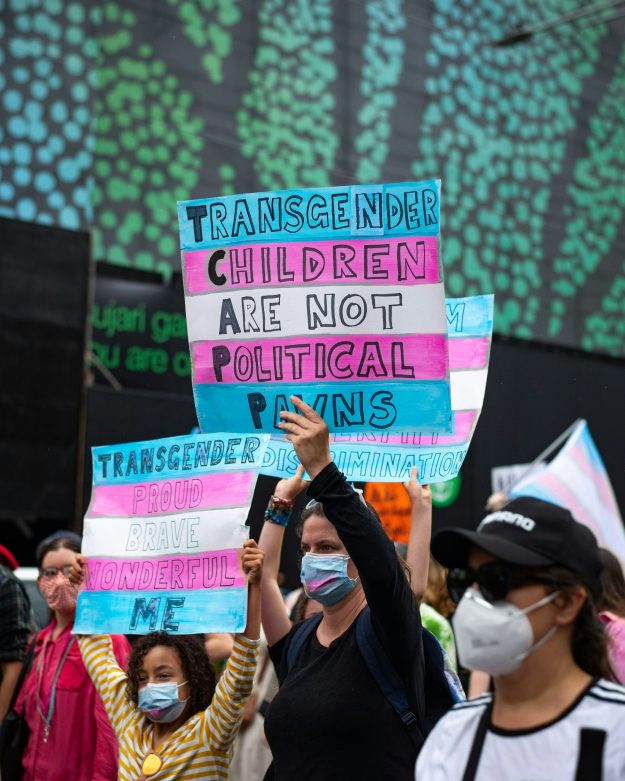
And now we march for the rights of transgender youth. (Photo Credit: Nikolas Gannon)
Because queer history is human history.
The mission was simple: Travel across the US, mostly to red states, and take photos of trans youth with their families. From Oklahoma to New Hampshire, the goal is to provide solidarity and to spotlight love, showcasing the bravery of identity and the power of allyship. Now, more than ever, Freidin’s work is pivotal, powerful, and inspiring.